





 Back
Back

 Book a meeting
 Book a meeting


LinkedIn marketing strategy: The new rules of social influence
Why content on your LinkedIn page isn’t cutting through – and what you can do about it.
Felix Gustavsson, Digital Marketing Manager View Felix’s profile



LinkedIn now has over a billion members, making it the world’s largest professional network. But many brands still struggle to get their message to land. Why?
That’s the question we explored with LinkedIn’s Eleanor Slinger in our latest webinar. As a B2B marketing specialist, she shared practical insights on how to sharpen messaging for today’s multi-generational audiences, and why authenticity, short-form video and scroll-stopping content matter more now than ever.
Authentic marketing efforts
LinkedIn users are increasingly looking for substance over spin. While this is true for all generations, it is especially true for Gen Z, which is the platform’s fastest-growing audience and is deeply sceptical of traditional institutions. They’re more likely to trust individuals than faceless brands, and they expect transparency and human connection from the content they engage with.
Gen Z users on LinkedIn
Year on Year growth in Gen Z users on LinkedIn
For marketers, that means they need to bring authenticity. Whether it’s sharing a personal career journey, a quick behind-the-scenes video, or a candid take on industry trends, content that feels real performs better.
The data backs this up. LinkedIn posts with a human face, a humorous angle or emotional resonance delivers stronger click-through rates:
Engagement boost from more authentic content
Authenticity also supports long-term brand building. When thought leadership reflects genuine values and clear opinions, it helps build trust – not just with today’s buyers, but with future decision-makers too. In a noisy feed, what sometimes stands out isn’t polish – it’s personality.
Scroll stopping insight
LinkedIn users aren’t just there to scroll — they’re there to learn. Gen Z and millennial professionals in particular come to the platform to upskill and deepen their understanding of their industry and markets. What they’re not looking for is a sales pitch.
Instead, they want credible expertise and meaningful ideas — insights that challenge them, delivered by real people with something to say. This is what makes thought leaders so effective on LinkedIn.
We [LinkedIn] want that thought leadership content. Why? Because that content resonates with users, and we’re actually all about the user.”
Eleanor Slinger
Thought leadership works best as part of a full-funnel approach: building awareness, sparking engagement, driving long-term conversion and generating leads. It should be opinionated, well-informed and clearly linked to your brand’s core strengths. Done well, it builds trust and grows your share of voice in a crowded feed.
So why aren’t more brands investing in this kind of content consistently? Because it’s hard.
Of marketers say creating genuine insights is their biggest thought leadership challenge
Of marketers say their goal with thought leadership is to showcase a perception of expertise
When we asked marketers about their biggest challenges during our recent webinar, nearly half said it was creating genuinely original insight. Creating thought leadership demands time, clarity, and the courage to say something new. But for those who get it right, the rewards are clear.
Short-form video is king
In a feed where the average user scrolls through the equivalent of 90 metres of content each day, roughly the height of Big Ben, attention is a scarce commodity. To cut through, brands need to be concise — and that’s where short-form content comes into its own.
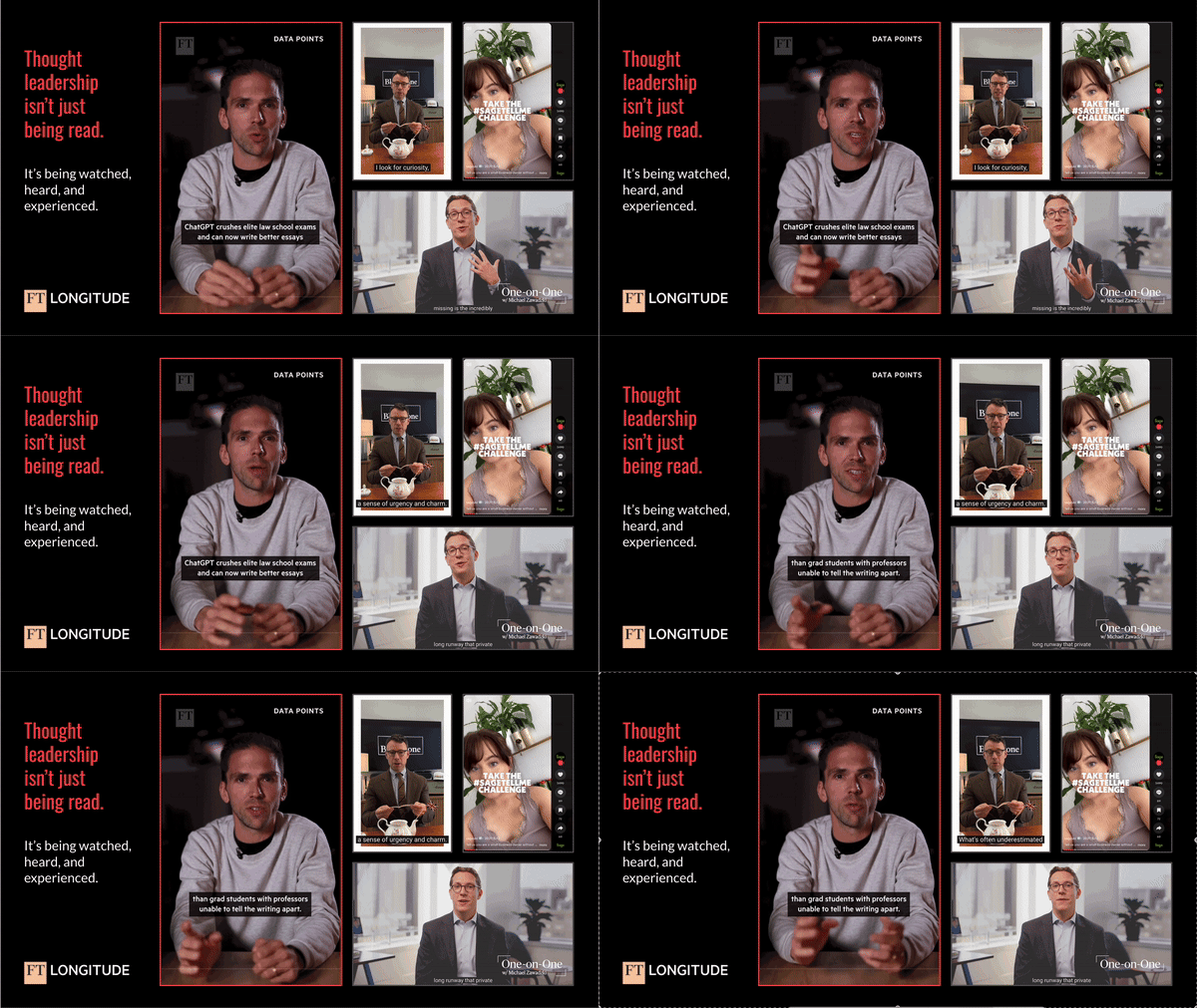
Short-form video (under 60 seconds, ideally closer to 30) is the format of choice for Gen Z and millennial users, but is seeing growth across every generation. Audiences are increasingly preferring quick, impactful pieces that offer clear value fast — whether that’s a practical insight, a bold opinion or a compelling stat.
Short doesn’t mean shallow. With the right approach, bite-sized content can be just as thoughtful and authoritative as longer formats. And when part of a broader campaign, it can play a critical role in building familiarity, reinforcing key messages, and prompting deeper engagement.
Plan, target and measure
Many brands assume that good content will naturally find its audience. On LinkedIn, that’s rarely the case. Unlike platforms with algorithmic discovery feeds, LinkedIn prioritises a user’s existing network — which means that without clear planning and targeted amplification, high-quality content can easily go unseen.
Eleanor emphasises that marketers often underuse the data at their fingertips. LinkedIn’s first-party data — based on what users actively share about their roles, skills and interests — allows for precise targeting across profession, seniority, geography and more. Yet too many campaigns still rely on guesswork or default settings, rather than target audience insight.
Of marketers say amplifying for maximum impact is their biggest thought leadership challenge
Eleanor believes paid campaigns are often the missing link. They don’t replace organic content — they amplify it to the right people at the right time. And they unlock serious measurement opportunities: not just clicks and impressions, but share of voice, message resonance, and audience breakdowns by sector or function.
Brands that succeed on LinkedIn are those that treat content like any other strategic investment, with clear objectives, performance data, and a willingness to refine and optimise over time.
Closing thoughts
In a crowded feed and a competitive market, smart LinkedIn content doesn’t just inform — it earns attention, builds trust and drives action. For brands willing to invest in authenticity, insight and strategic delivery, the opportunity is clear: be seen, be heard, and be remembered.
FT Longitude helps brands cut through the noise with content that’s insight-led, audience-focused and built to perform on LinkedIn and beyond.
Get in touchSign up to the newsletter
We help organisations stand out, speak with authority and spark inspiration, so change can happen. That’s real intelligence with influence. Sign up to our newsletter to get regular updates.
Subscribe