





 Back
Back

 Book a meeting
 Book a meeting


What smart thought leadership looks like in the age of AI
As AI shakes the foundations of thought leadership, how can senior marketing leaders use it to their advantage?
Eva Menger, Senior editor View Eva’s profile


You’ve probably noticed it. The AI ‘slop’ flooding your inbox, social feeds and search results. For consumers, it can be annoying. For brands, it threatens visibility and engagement, and there’s intense pressure on them to stand out while maintaining their credibility.
To discover whether brands are managing to do this, we hosted a series of roundtable discussions with senior marketing leaders across a range of industries. The verdict? The more AI there is, the more we’ll all want human perspectives.
Here’s what we learned from the senior marketers at our exchanges.
Good content begins with experts
It’s undeniable that AI can help to shape thinking, but the most powerful thought leadership is rooted in original, expert insight. When everyone has access to the likes of ChatGPT and Perplexity, the real value is in distinctive points of view that go far beyond generic summaries and information that’s already widely available.
AI can’t give brands differentiation on its own. But it can help organisations to use more of their people’s unique perspectives. It’s becoming increasingly important for senior spokespeople to take a position, and marketers can help by gathering their perspectives and using AI to distil any complex ideas into clear actions.
For brands, this means marketing and thought leadership teams must work more closely with senior leaders and subject matter experts. By building these relationships and making it easy for leaders to voice their opinions regularly, marketers can put original thinking at the heart of their content strategies.
Experts in the spotlight: Unisys
Ambiguity is a strength
The mark of good thought leadership is sounding definitive, right? Not any more. AI means anyone can sound like an expert, and it doesn’t like to admit it’s wrong, so showing vulnerability can make brands instantly seem more real. In many contexts, especially where decisions are risky, brands can build trust by showing judgment in the grey areas. There’s a lot of uncertainty in the world right now, and thought leadership should reflect that.
Increasingly, audiences want to hear the reasoning behind a conclusion. It’s about nuance, contrarianism and finding clarity in the information overload.
Macro trends are changing constantly, and real expertise will shine through in what brands choose not to follow – and why. In-depth content formats such as audio interviews and live events can capture and communicate the reasoning process, while short-form social assets can promote the perspectives that emerge from this thinking and encourage further discussion.
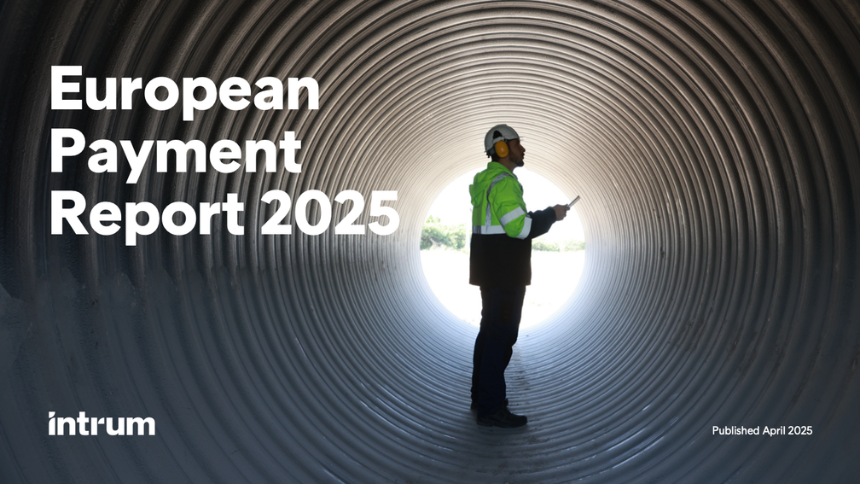
Leaning into uncertainty: Intrum
Human-first beats machine-first
Generative AI is fundamentally changing the way we find and consume information. It might help brands to build their top-of-the-funnel visibility, but this ‘zero-click’ model makes it much harder to measure other marketing metrics such as click-through rates and page views. For marketers, optimising for this new type of AI-led search and discovery can feel like a dark art.
As AI models evolve, uncertainty about which content they might prioritise puts brands in a difficult situation. But even if generative engine optimisation (GEO) prioritises the ‘machine-friendliness’ of content, that doesn’t mean it can’t be human too. The material that performs well in AI-led search often overlaps with what earns trust with B2B audiences: thought-provoking ideas that are articulated well and supported by strong evidence.
Brands that keep sharpening their thought leadership with AI in mind will give themselves an advantage. But this still means focusing on the tried and tested foundations. Whether it’s proprietary research or a long-form report, there’s no valuable AI summary without original, in-depth content.
Our latest thinking on ‘zero-click’
The PDF is still valid – but it has competition
Many thought leadership campaigns are still based on long-form, in-depth research reports. And while the value of the PDF has long been the topic of heated marketing debates, many marketers still favour it as their shareable, downloadable and foundational flagship piece of content.
But the battle for attention and authenticity in a sea of AI-enabled content is creating an appetite for alternative thought leadership formats. Whether it’s rediscovering the value of printed reports that they can hand out at events, small in-person round tables or thoughtfully crafted emails, many brands are choosing to create experiences that are more personal and tangible.
This impulse also makes a strong case for audiovisual formats. Podcasts are now CEOs’ second favourite way to consume ideas because they’re more human and less formal, while video can convey complex ideas through the real voices of executives.
Podcast thought leadership: SThree
Proprietary data is the jewel in the crown
Another way brands can use AI for their thought leadership is by training it on proprietary data sets such as survey results, customer data and interview transcripts. When they build a model to generate responses based on this data, that model has the potential to produce unique content. AI can also help brands to do more with their data, from regression analysis to pattern identification and analysis of large amounts of open-ended responses. And it can help marketers to use their data more effectively for personalised messaging.
Used responsibly and securely, proprietary data combined with AI can lift thought leadership above the generic content generated by large language models.
To rise above the AI slop, brands’ thought leadership will combine AI and humans: AI to boost productivity and enable experimentation, and humans to ensure content is accurate, authentic and based on the organisation’s distinct expertise.
Join our next webinar
For more ways to create distinctive, trusted thought leadership in the age of AI, join our upcoming webinar. The work before the words features speakers from WARC, Gate One, FreedomPay and Agentive. We explore how thought leadership programmes can evolve, how individual expertise and brand authority work together to inspire confidence and loyalty, and much more.
Sign up here.
Sign up to the newsletter
We help organisations stand out, speak with authority and spark inspiration, so change can happen. That’s real intelligence with influence. Sign up to our newsletter to get regular updates.
Subscribe