





 Back
Back
 Book a meeting
 Book a meeting


Zig when others zag: breaking free from copycat thought leadership
Q&A with Brian Macreadie
Eva Menger, Senior editor View Eva’s profile


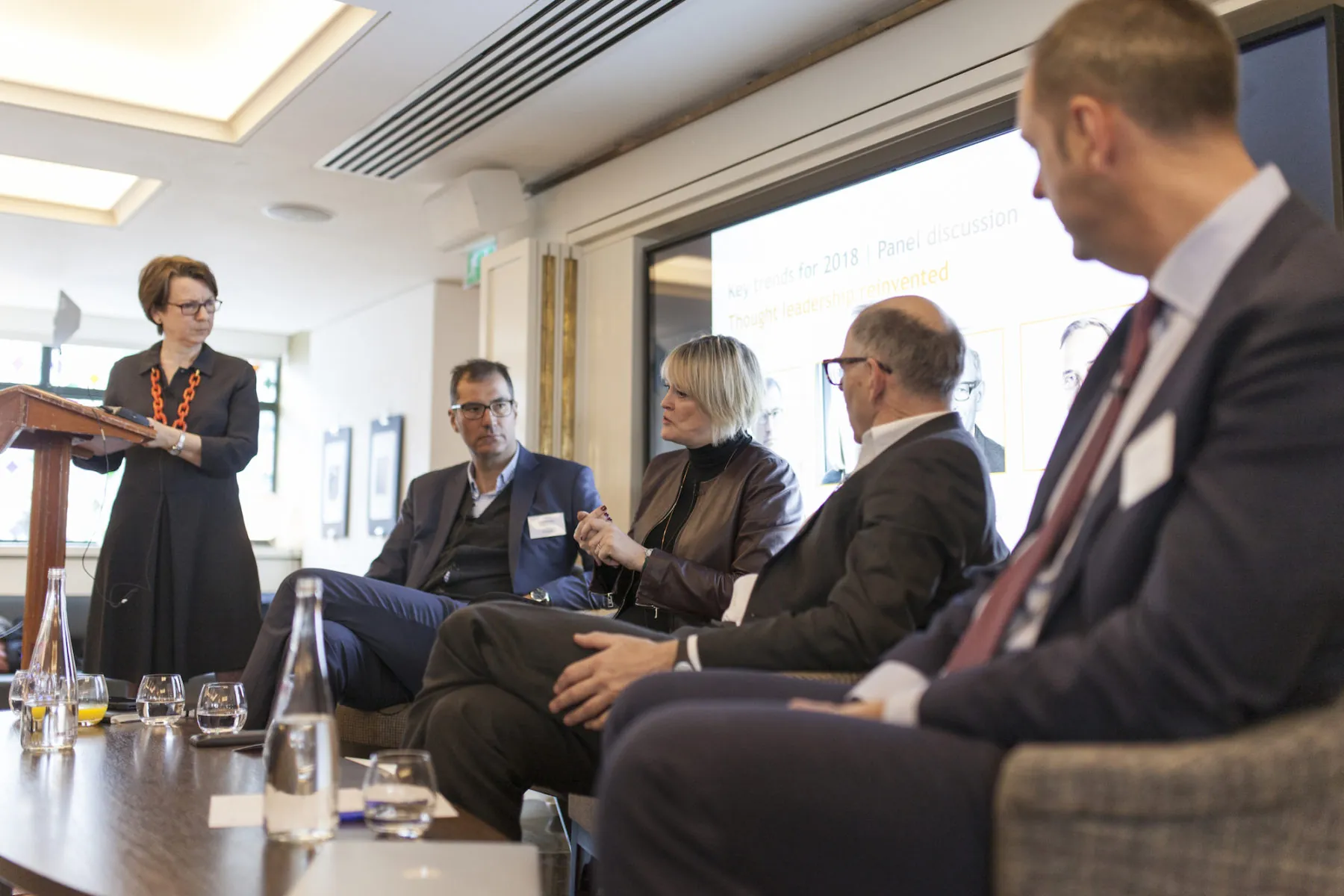
At FT Longitude’s recent event on the future of thought leadership and the insights industry, senior editor Eva Menger was joined by award-winning marketer Brian Macreadie, head of marketing at international law firm Addleshaw Goddard LLP to discuss innovation and ideation in thought leadership.
Eva: The thought leadership space has a lot of copycat content. Why is it that so many companies struggle to achieve differentiation in their B2B thought leadership?
Brian: In our line of work the basic principle of differentiation is drummed into us from day one; zig when everyone else zags. But often there’s a disconnect between the principle and the actual practice of it.
That disconnect could be because we’re failing to take inspiration from the right places. Innovation is often sparked by drawing on different sources of inspiration. Of course, it’s very important not to directly copy others, but, for instance, you can take inspiration from other sectors.
Another common hurdle that blocks content differentiation is that once we create innovative ideas, we may lack the personal influencing skills to get the right ideas over the line. Achieving buy-in, especially for bold ideas, is tough; it’s a struggle. We work in consensus-based environments riddled with groupthink, where you have maybe over 10 people that have a say in what we do, and choices end up being decided by the lowest common denominator.
When it comes to ideation, how do you gauge whether an idea is worth pursuing?
We have an internal rule that we won’t run something if it doesn’t move us.
As marketers it’s our duty to help our colleagues understand that. Yes, our thought leadership needs to impart information, but it also has to intrigue audiences on an emotional level. A key tactic for achieving this depth is by asking ourselves: ‘so what’? How is this content going to impact the life of a fellow human? How’s this going to make their world better? What could go wrong for them if they don’t act on this piece of thought leadership?
Then we do all sorts of validation tests to check whether our ideas are hitting the mark. In one test we imitate a social media environment by only flashing up ideas for say three seconds and then ask stakeholders: did the idea stop you in your tracks? What do you remember about it? We usually display a range of ideas and include at least one outlandish one, and the contrast tends to make every other idea looks more manageable.
Normally when we show ideas, people understand the difference between something that moves them or doesn’t.
It takes a certain level of influence to get the right ideas over the line, especially with bold thought leadership. How have you and your team built influence in the business? And how hard do you need to fight to get an idea to get signed off?
Sometimes we have to fight hard. There’s no magic art for this, a lot of it comes down to pure determination.
We started small by covering the basics. Gradually improving our visuals and how emotive our copywriting was. This started to catch people’s attention and approval. And whenever our rivals produce strong thought leadership, I’d share it with our teams to spur us on to keep raising our bar higher.
Next, we did slightly more human-centric events, with people sharing stories rather than just reporting updates on the law. And bit by bit, people started building their trust in me and the team. And before long, we were doing more progressive things, like we did a big legal poetry campaign where we had poets write about thought leadership and hot topics. That initiative performed really well: we had a 6,000% increase in reads. Those sorts of results really added momentum. Now the business tends to back us on most ideas, two of which led to us winning creative golds at the B2B Marketing Awards.
And in terms of making sure an idea reaches its full potential once launched, what tactics have proved useful with getting employees to help bring the human-interest elements of your thought leadership to life?
It’s all about encouraging employees to share their stories and experiences that connect to the subject at hand. And we work hard to make things as simple as possible for our teams to share our thought leadership assets. We go to partner meetings; we visit their offices. We attend sector calls. We create templated and bespoke social media posts. We do internal comms and screensavers.
When you put in this groundwork, you’ll find you may not get every single employee to lean in, but you’ll get enough. And momentum will build. Some people will bite straight away and will promote the assets on LinkedIn in a way that sparks interest and may even land a bunch of pitches and client meetings as a result. And news will get round and other colleagues will be persuaded to get involved.
For the full recording of this session and more from our experts about the power of personality in thought leadership and B2B marketing register here to watch the webinar.

Brian Macreadie
Winner of Marketing Week’s Marketing Team of the Year 2023; twice-winner of the coveted Grand Prix at the B2B Marketing Awards; and once awarded the Most Creative Individual Working in B2B Marketing, Brian Macreadie is the Head of Marketing at international law firm, Addleshaw Goddard. His 25+ year career in B2B marketing spans media, telecoms, and professional services industries.
Sign up to the newsletter
We help organisations stand out, speak with authority and spark inspiration, so change can happen. That’s real intelligence with influence. Sign up to our newsletter to get regular updates.
Subscribe